
Gender-Diverse Health Care Access
The Barrier
In response to a rising number of calls from individuals facing barriers to gender-affirming care, HLA launched the Gender-Diverse Health Care Project in 2016 to ensure members of the gender-diverse community can access the health care they need. A 2017 study published by the RAND Corporation found that nearly a quarter of adult transgender Massachusetts residents surveyed were unable to access transition-related care in the previous 12 months. Our clients often face inadequate provider networks, provider billing issues, and insurance denials for services.
When gender-diverse individuals are forced to pay for gender-affirming care out-of-pocket, they face the additional barrier of higher levels of financial instability compared to the cisgender population. For many transgender people HLA represents, paying out-of-pocket for gender-affirming health care is not financially possible. Those who are in this situation and must go without medically necessary gender-affirming health care suffer from significantly negative health consequences.
In addition to these barriers, the current federal administration is attempting to effectively ban medically necessary gender-affirming care for transgender youth. Transgender and gender-diverse youth are already at higher risk of worse mental health outcomes. State-level legislation that restricts the rights of gender-diverse individuals can exacerbate these negative mental health outcomes, including increased risk of suicide attempts. Ensuring access to gender-affirming care for transgender and gender-diverse youth improves health outcomes and saves lives.
In HLA’s Gender-Diverse Health Care Access Project, we address systemic barriers to gender-affirming care by providing direct legal representation, building capacity among providers, and advocating for policy reforms to protect access to care.
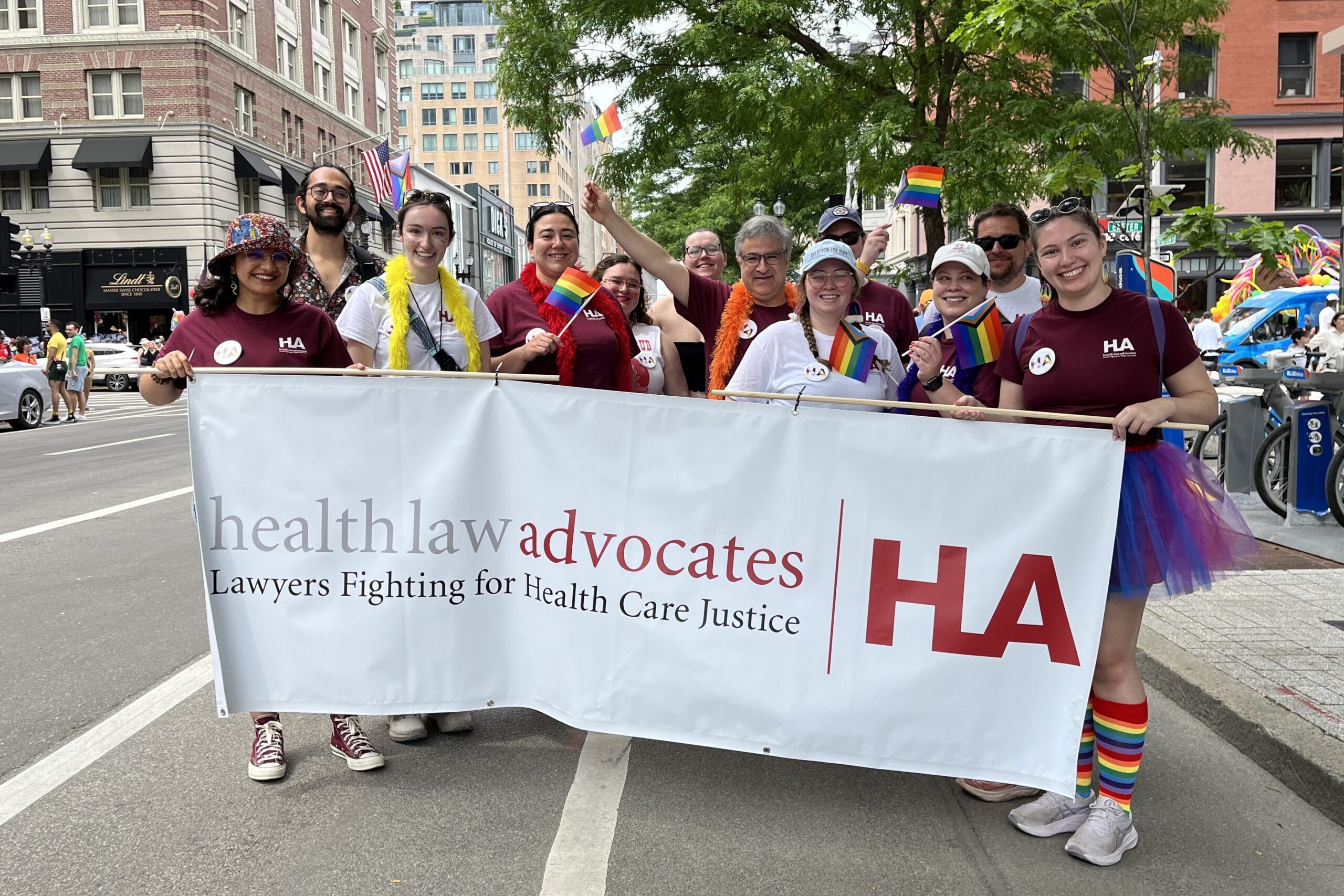
HLA staff marching in Boston Pride for the People Parade in June 2026
Legal Services
Our team provides free, high-quality legal help for gender-diverse individuals with public and private insurance. We can help with:
- Securing insurance coverage for gender-affirming care, including surgeries and medically necessary hair removal
- Ensuring transgender youth can access gender-affirming care, particularly when experiencing difficulty finding a provider
- Correcting errors in MassHealth coverage created by legal name changes
- Handling confusing or predatory billing from health care providers
- Other problems with getting health care
Capacity Building
HLA offers trainings, lectures, and presentations about our work and about gender-affirming care. Our team has delivered presentations and trainings on the impact of federal threats to gender-affirming care for Massachusetts patients, providers, and insurance coverage.
Policy Reforms
HLA and our allies have made important progress over the past several years improving access to gender-affirming health care. But there is still much work to be done to address injustices in the health care system facing gender-diverse people.
HLA is a proud and founding member of the Massachusetts Transgender Health Coalition. This coalition promotes policy reforms to improve health care access and builds community knowledge about gender-diverse health access issues. We worked alongside our allies in the coalition to successfully advocate for changes in state policy that will continue to improve health insurance coverage for gender-affirming services.
HLA continues to advocate for policies that safeguard access from harmful federal actions and expand insurance coverage for medically necessary services, including gender affirming electrolysis. In February 2026, HLA, alongside Health Care for All (HCFA), submitted comments in response to proposed federal rules that would bar any hospital from participating in Medicare and Medicaid if it provides gender-affirming care for transgender or gender-expansive youth under age 18, and that would prohibit federal Medicaid and CHIP funding for gender-affirming care for transgender youth.
Thank you to our supporters
This program is supported by a grant from The Equality Fund of The Boston Foundation.